Gas Lines & Appliance Hookups
Gas work is the part of plumbing where the license actually matters. Every run we install is sized for the load, pressure tested, permitted, and inspected. There is no version of this worth doing informally.
New gas lines
Common projects we run lines for:
- Outdoor kitchens and BBQs — no more swapping propane tanks mid-cook
- Firepits and patio heaters
- Gas ranges and cooktops — including electric-to-gas conversions
- Pool and spa heaters
- Standby generators
- Gas dryers
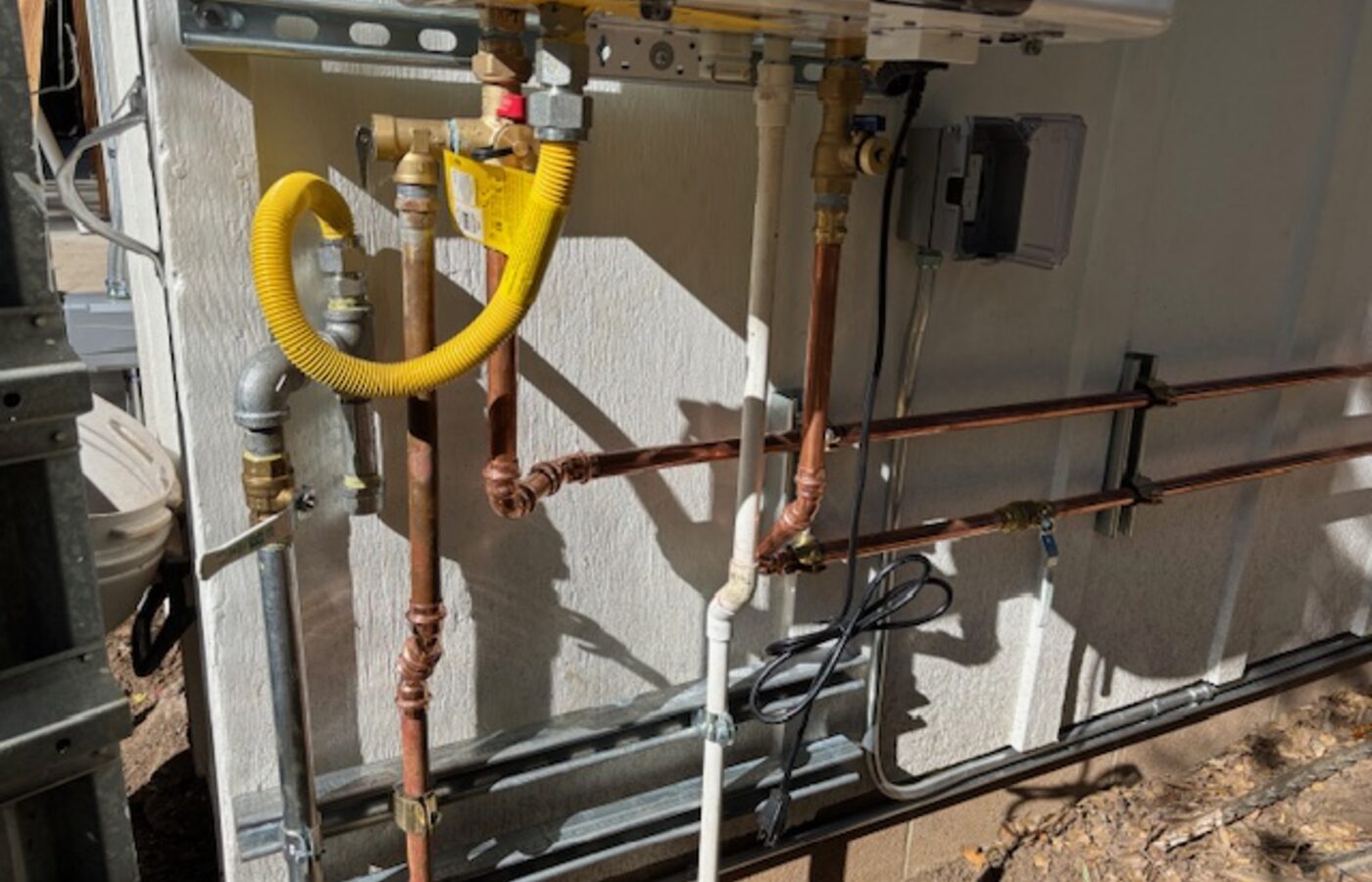
- Tankless water heaters — which almost always need an upsized line
- Shop and garage heaters
Sizing is the part that gets done wrong. Every appliance on the system draws from the same supply, and a line that was adequate for what was there five years ago may not be adequate once you add a 199,000 BTU tankless. We calculate the total connected load and size back to the meter rather than just teeing off the nearest convenient pipe.
Leak testing and repair
If you smell gas, leave the building and call the gas utility first. That's not us being cautious — that's the correct order of operations.
Once it's safe, we locate and repair. We pressure-test the system to find whether you have an actual leak and where, repair or replace the failed section, and re-test before anything is put back in service. Common failure points are corroded black iron at threaded joints, old flex connectors past their service life, and unprotected pipe where it passes through or under structure.
Permits and inspection
Gas work requires a permit in every jurisdiction we work in, and it requires inspection. We pull it, we schedule it, and we meet the inspector. If somebody quotes you gas work without a permit, understand what you're actually being offered: a lower price in exchange for your liability. Insurance carriers look at this closely after a fire.
Gas Lines FAQs
Can you run a gas line to my BBQ or firepit?
Yes, that's one of our more common projects. We'll look at where your meter is, what else is on the system, and the route to the patio, then quote it firm.
How do I know if I have a gas leak?
The odorant added to natural gas smells like sulfur or rotten eggs. Other signs are a hissing sound near a line or appliance, dead vegetation in a line over a buried run, and an unexplained jump in gas usage. If you smell it, get out and call the utility.
Do you convert electric ranges to gas?
Yes, provided gas service is available at the property. We run and size the line, install the shutoff and connector, and coordinate the appliance hookup.
Is CSST or black iron better?
Both are code-compliant when installed correctly. Black iron is the traditional choice and is very durable. CSST installs faster on long or complex routes but has specific bonding requirements that must be followed exactly. We use whichever suits the run and we follow the manufacturer's installation requirements to the letter.
Other services
Drain Cleaning
Slow drains, backed-up sinks, and stubborn main-line clogs cleared with cable machines, hydro-jetting, and camera confirmation.
Learn moreWater Heaters
Repairs, same-day replacements, and tankless conversions — sized properly and installed to code, with our hard water in mind.
Learn moreRepiping & Water Lines
Galvanized, polybutylene, and failing copper replaced with PEX or copper — planned around your household, not the other way around.
Learn moreNeed a plumber who picks up the phone?
Call and talk to someone who actually does the work. We'll tell you what's wrong, what it costs, and when we can be there.